sabato 31 marzo 2007
Zelda 2057
Ne abbiamo parlato sullo scorso Podcast, ma non siamo gli unici a sognare varianti di Zelda. Ecco cosa hanno tirato fuori i ragazzi di WiiTv
Un paio di interviste per il ragazzi di GoNintendo.
Se non conoscete il sito, eccovi il link www.gonintendo.com E' un sito estremamente aggiornato. Non come il nostro ma quasi :P Sono ragazzi in gamba, e speriamo continuino cosi'.
Quando uscirà Eledees?
In principio doveva uscire a febbraio. Poi è stato il turno di Aprile. Adesso, nel sito dell'Halifax, distributrice del gioco e nota succhiasoldi-senza-ritegno, si parla di Giugno. Riusciranno mai i giocatori europei a mettere le mani sopra questo Eledees?
Speriamo. Ecco la pagina relativa al primo titolo Konami per Wii.

Speriamo. Ecco la pagina relativa al primo titolo Konami per Wii.

Una canzone per Nintendarea!
Uno dei nostri lettori, Fantasheva, dopo aver ascoltato il nostro podcast di ieri, ha composto una canzone estrapolando varie perle di saggezza, epiteti poco rassicuranti e profezie varie.
Sentitela qui: NINTENDAREA NUJAZZ
Dice il Soliani che per il prossimo Podcast scrivera' su una lavagna e Alex ripetera' ad alta voce. Dice che si sente cecchinato come il nemico alle porte e che ha paura a mettere il piede fuori di casa.
Sentitela qui: NINTENDAREA NUJAZZ
Dice il Soliani che per il prossimo Podcast scrivera' su una lavagna e Alex ripetera' ad alta voce. Dice che si sente cecchinato come il nemico alle porte e che ha paura a mettere il piede fuori di casa.
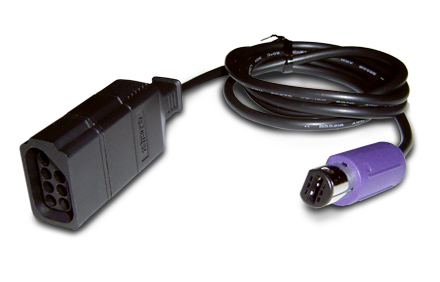
Retroporte per Wii
Versione NES
Versione SNES
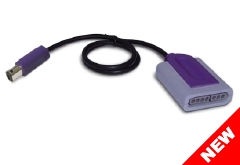
Non sono fantastici? Così potrete utilizzare i pad originali con i giochi della Virtual Console. Attendiamo la versione N64. Intanto questi li potete acquistare qui.
MegaMan danza
Alcuni fan si sono divertiti a comporre questo video con gli sprite dei primi tre episodi di MegaMan, che tra l'altro sono anche quelli che di più ha influenzato l'immaginario collettivo dei videogiocatori. Fanno capolino, oltre al Blue Bomber, Fireman, Bomberman (che non è quello Hudson), i due dottori pazzi, Elecman, Iceman, Cutman, Topman, Shadowman, Snakeman.. che ricordi! Bellissimo. Me li rigiocherei tutti subito, un carisma micidiale.
La pose del ballo in Giappone sono conosciute, essendo tratte da un cartone chiamato The Melancholy of Haruhi Suzumiya; il nome della canzone in sottofondo è "Hare Hare Yukai".
La pose del ballo in Giappone sono conosciute, essendo tratte da un cartone chiamato The Melancholy of Haruhi Suzumiya; il nome della canzone in sottofondo è "Hare Hare Yukai".

Itagaki a ruota libera
1UP intervista Itagaki, creatore di Dead or Alive, Ninja Gaiden (ora anche per DS) e gran capoccia del team Ninja.
1UP: What made you decide to do a Nintendo DS game now? I know you’ve always been a fan of Nintendo, so does it have anything to do with wanting to support their hardware, or the huge installed base? Enlighten us.
Tomonobu Itagaki: It’s not as though I’ve decided to make this because of the success of the DS. We originally announced our intent to create a title for the Nintendo DS back at E3 in 2004. I doubt anyone at that time could predict what would be successful and what wouldn’t. So why have I chosen to do a DS game? Simple: because of its originality. In the world of console gaming, hardware power rules all, but that is not the case in the world of portable gaming. People look for how the game feels to the touch, and the physical properties of the device itself become extremely important. That’s why I chose to announce that I would develop for DS back at that E3, even before I had seen the actual machine. So, why did I choose to do a portable game in the first place? This is also simple: to challenge myself. You might ask why I must do so, but that question would be foolish. Any creative endeavor must begin with a challenge. It took me 10 years to make the Dead or Alive series the number one fighting game on the planet. Making Ninja Gaiden the world’s finest action game was a bit quicker, yet it still took four years. There are obviously many reasons why I was able to create these two franchises. One thing that I can say is that, as a group of people that love to challenge ourselves, the hurdles that I set for our team when making these games were so high that we couldn’t help but be thrilled, and as a result the development process for each game was always very challenging. When I completed Ninja Gaiden in 2004, I immediately turned my thoughts to what I would challenge myself with next. I considered dominating a third genre on consoles, but that didn’t seem interesting enough. I wanted something that would make people say “Wow, Team Ninja can do this kind of game, too” when they saw my third major endeavor. However, what percentage of gamers do you really think would be surprised if I were to make an amazing FPS for consoles? Thus, I decided to take a broader view of gaming genres and make a first-rate game in the portable medium my third great challenge.
Perchè postare un intervista che non significa nulla? Perchè è divertente, perchè non si può non provare tenerezza per uno che crede fermamente che Dead or Alive non solo sia un picchiaduro ma che sia il migliore, che crede che Ninja Gaiden sia il miglior action della storia quando prende mazzate da diversi contendenti a destra e a manca (mi viene in mente Prince of Persia, God of War) e che la fa facile sull'idea di creare un fantastico FPS. Comunque ci ha promesso un grandissimo gioco su DS, Ninja Gaiden Dragon Sword. Come direbbe il buon vecchio Neo in Matrix, per Itagaki "comunque vada sarà un successo".
1UP: What made you decide to do a Nintendo DS game now? I know you’ve always been a fan of Nintendo, so does it have anything to do with wanting to support their hardware, or the huge installed base? Enlighten us.
Tomonobu Itagaki: It’s not as though I’ve decided to make this because of the success of the DS. We originally announced our intent to create a title for the Nintendo DS back at E3 in 2004. I doubt anyone at that time could predict what would be successful and what wouldn’t. So why have I chosen to do a DS game? Simple: because of its originality. In the world of console gaming, hardware power rules all, but that is not the case in the world of portable gaming. People look for how the game feels to the touch, and the physical properties of the device itself become extremely important. That’s why I chose to announce that I would develop for DS back at that E3, even before I had seen the actual machine. So, why did I choose to do a portable game in the first place? This is also simple: to challenge myself. You might ask why I must do so, but that question would be foolish. Any creative endeavor must begin with a challenge. It took me 10 years to make the Dead or Alive series the number one fighting game on the planet. Making Ninja Gaiden the world’s finest action game was a bit quicker, yet it still took four years. There are obviously many reasons why I was able to create these two franchises. One thing that I can say is that, as a group of people that love to challenge ourselves, the hurdles that I set for our team when making these games were so high that we couldn’t help but be thrilled, and as a result the development process for each game was always very challenging. When I completed Ninja Gaiden in 2004, I immediately turned my thoughts to what I would challenge myself with next. I considered dominating a third genre on consoles, but that didn’t seem interesting enough. I wanted something that would make people say “Wow, Team Ninja can do this kind of game, too” when they saw my third major endeavor. However, what percentage of gamers do you really think would be surprised if I were to make an amazing FPS for consoles? Thus, I decided to take a broader view of gaming genres and make a first-rate game in the portable medium my third great challenge.
Perchè postare un intervista che non significa nulla? Perchè è divertente, perchè non si può non provare tenerezza per uno che crede fermamente che Dead or Alive non solo sia un picchiaduro ma che sia il migliore, che crede che Ninja Gaiden sia il miglior action della storia quando prende mazzate da diversi contendenti a destra e a manca (mi viene in mente Prince of Persia, God of War) e che la fa facile sull'idea di creare un fantastico FPS. Comunque ci ha promesso un grandissimo gioco su DS, Ninja Gaiden Dragon Sword. Come direbbe il buon vecchio Neo in Matrix, per Itagaki "comunque vada sarà un successo".
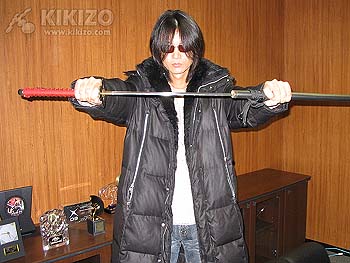

Nippon Ichi su Wii?
Nippon Ichi, the team behind games like Atelier Iris, Ar Tonelico, Disgaea and more may be moving into DS and Wii territory. During a meeting discussing their upcoming PS2/PSP projects, a NIS America exec was quoted as saying, “I’ve heard rumors–just rumors!–that NIS is preparing DS and Wii contracts”. Hopefully we will hear some sort of official announcement soon. I would love to see some of Nippon Ichi’s work on the Wii or DS.
A quanto pare Nippon ichi da quanto ha saputo questo "insider", sta preparando contratti per uno staff Wii\DS. C'è in ballo un progetto? Vedremo, per ora classifichiamo tutto come rumor.
A quanto pare Nippon ichi da quanto ha saputo questo "insider", sta preparando contratti per uno staff Wii\DS. C'è in ballo un progetto? Vedremo, per ora classifichiamo tutto come rumor.
Pubblicita' per la versione Giapponese di Kanji Ken DS
Non vedete l'ora di imparare i Kanji? Importatevi questo gioco per DS...a patto sappiate il giapponese. NOn e' esclusa una versione USA e PAL.
Fire Emblem Wii Video della versione Giapponese
Non e' che lo compro...ne compro due! Godetevi la semi recensione, partono dicendo che il gioco e' una merda perche' e' una conversione e finiscono dicendo che e' il miglior gioco di ruolo tattico che abbiano mai giocato. Fire Emblem e' in tutto e per tutto uguale alla versione Game Cube, non sono neanche stati aggiunti i controlli per il Wii Remote. Ma se non avete giocato quello Gamecube, forse e' il caso di farci un pensierino.
Nuovo video per Guilty Gear XX Accent Core Wii
Fan dei picchiaduro? Cliccate sull'immagine e godetevi il nuovo video di Guilty Gear in Arrivo per il mercato Giapponese il 31 di Marzo.

Backbone Entertainment sta lavorando sul Wii
Ecco un annuncio di lavoro apparso su Gamasutra:
Backbone Entertainment is a part of Foundation 9 Entertainment, the largest independent game developer in North America. We are producing high profile titles such as Sonic Rivals for the Sony PSP and are embracing leading edge technologies including the Xbox 360 and Nintendo Wii.
Backbone Entertainment is a part of Foundation 9 Entertainment, the largest independent game developer in North America. We are producing high profile titles such as Sonic Rivals for the Sony PSP and are embracing leading edge technologies including the Xbox 360 and Nintendo Wii.
N’Gai Croal intervista Shigeru Miyamoto
Bellissima intervista con il maestro realizzata da N’Gai Croal. La potete trovare qui. Ecco un estratto dell'intervista;
Level Up: There were a lot of Nintendo fans that were expecting–or hoping, rather–that something new would be announced during your talk at GDC. Instead, it was more of a look back, at how you got to where you are today as a designer. Why did you decide to make that the focus of your talk, rather than get into something new? Is it because of the secondary stock offering, or were there other reasons why you chose to look back?
Shigeru Miyamoto: Well it’s true that because of the secondary stock offering that we’re in a quiet period and can’t announce any new information right now, but that’s not the reason that I decided to do more of a look at how things have changed over the years. Part of the reason I gave the speech I did is that for the last seven years, we’ve talked a lot about the expanded user base, the problems with the game industry shrinking in Japan, the potential for that to happen here in the U.S., but it’s been a lot of talking about it on the surface and not really getting into the meat of the subject. We never really up until now had a sense of how to turn what we saw [as] the solutions to those problems into reality. We finally with the DS were able to achieve that and see the changes that we’ve been seeing in the market. This time, I really wanted to take the experiences I’ve had with the DS and the Wii and try to share some of the understanding that I’ve gained with others. We’ve talked about how videogames have been advancing as technology advances. We’ve questioned whether there was really a need for graphics to continue to improve the way they have and processors to continue to improve the way they have. But we didn’t really have any concrete examples of how you could forego those types of advances and still have a revolutionary new gameplay style. So I really felt that now that we had some concrete examples of some of these ideas that we’d been talking about, that it was a good time for me to talk to the developers themselves about some of the ideal ways that we see creators can interact with technology and find different ways to use technology to bring their ideas to fruition. But at the same time I wanted to clear up some misunderstandings that some developers have about what Nintendo is trying to do, and make it really clear that we’re not saying that you need to turn your back on technology. We’re not saying that the game industry is bad and that we don’t like what people are doing. I wanted to take this opportunity to explain what my vision has been as a designer and a developer, and share that with them to help them better understand the things that we’ve been saying by using some of these concrete examples and looking back at some of the things we’ve been doing over the past several years. One of the biggest points of my speech is that there was a time when Space Invaders and Super Mario came out when videogames were at the center of pop culture. It was huge news. Everybody knew what Space Invaders was. Everybody knew what Super Mario Bros was. The world used to react to games and respond to games in a way that I haven’t seen it doing in a long time. I wanted to try to convey the idea to people that the expanded audience isn’t just about reaching out to new people but in fact it’s about trying to get videogames back to a central position in pop culture and getting the world to pay attention to videogames again. Sorry for such a long answer. [Laughs.]
